Responding to a Formal Dispute Letter From an Enterprise Customer
A structured response protects revenue while rebuilding trust through documented facts.

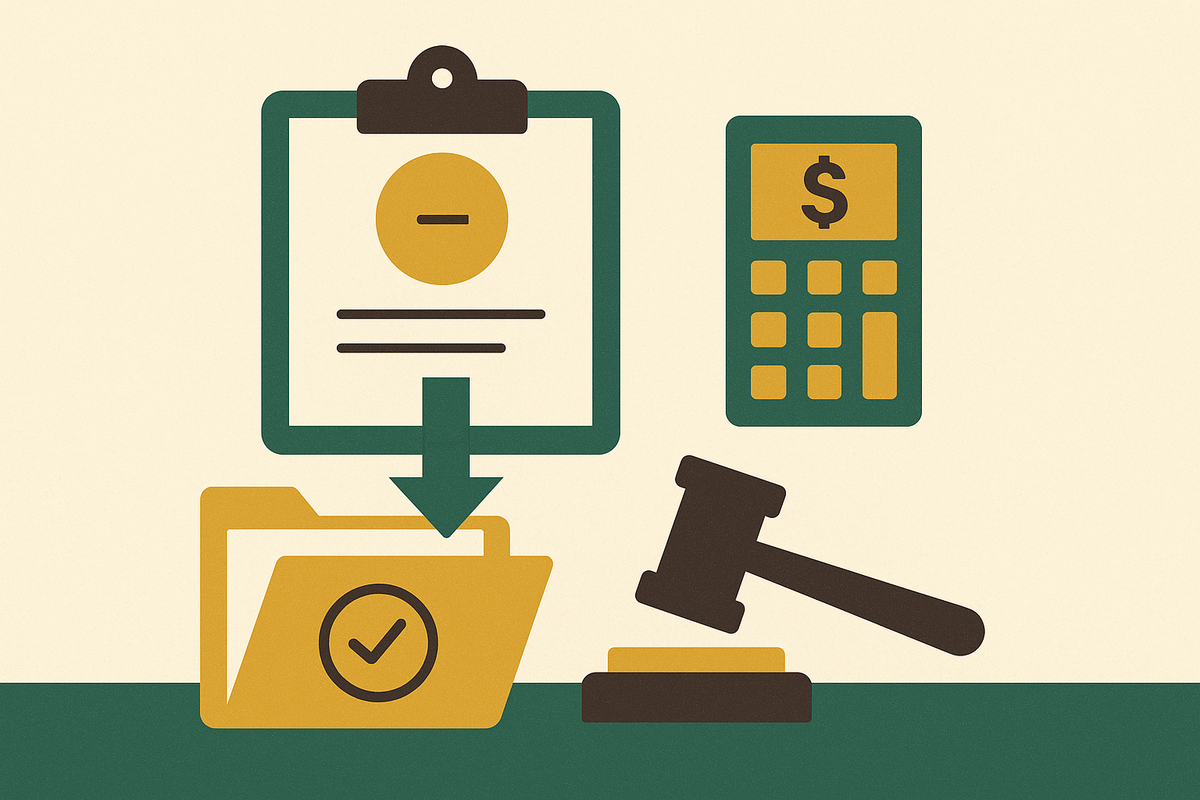
Responding to a formal dispute letter from an enterprise customer is about protecting payment and the relationship through a controlled process. A documented workflow acknowledges the claim, establishes the facts, separates errors from delay tactics, and reaches a defined resolution.
Why a formal dispute letter is a different operational event than a routine payment objection
Enterprise customers have long approval chains and teams whose job is AP, and they may use payment terms to manage their working capital. A formal letter is therefore a considered institutional act. It creates a written record, may trigger contractual notice periods, and can precede withholding payment entirely. Calling back may help, but a phone conversation is not a substitute for a response process.
The letter also points backward to something that has already broken down. A scope change may never have been written down, a price change may never have made it into the purchase order, or an invoice may have gone to the wrong contact. The team must find out what went wrong before anyone takes a position in the response. Improvisation is useful in comedy, less so when the punchline is an unpaid invoice.
How to read a dispute letter before doing anything else
Read first to classify the objection, because its type determines the response path. An administrative dispute is over details such as a wrong PO number, a rate that is wrong, or a duplicate invoice. A missing PO number on an enterprise invoice calls for a correction. These can be five-minute fixes, and overcomplicating them only stalls payment.
If the customer says the work was outside the agreed scope, check the contract and approval records before offering to give ground. A relationship dispute, by contrast, can arise when the marketing director approved the work but the CFO later refuses payment. That requires the people who approved and challenged the work to join the conversation directly with AR and AP.
Require the customer to identify the disputed items, explain the objection, and supply supporting documents. Also establish whether the objection appeared only after repeated payment requests without any earlier concern. Record that timing neutrally, since it warrants scrutiny but does not establish intent.
Acknowledging receipt within 24 hours and why the first response is not a concession
Acknowledge receipt within 24 hours without taking a position on the merits. Silence can read as indifference and leave room for internal escalation at the customer. An immediate discount makes the opposite mistake by offering a remedy before establishing the problem. The first response should control the process.
Keep the acknowledgment short and neutral. Confirm receipt, name the single point of contact, and give a specific date for a substantive response. A date creates a commitment that “soon” does not. Internally, flag the invoice as “in dispute” and pause automated late-fee accrual and collection sequences on the disputed amount.
That pause should not automatically freeze the entire balance. Most contracts allow partial payment of the undisputed portion, so separate it and pursue payment immediately where the terms permit. A contested line item should not acquire custody of every other charge.
The internal investigation: what to gather before responding substantively
Start with the signed contract or MSA together with the relevant Statement of Work. Add change orders, amendment approvals, and scope-change emails, including written confirmations of verbal approvals. Then gather records of milestones and delivery, which may include email approvals, timestamps from the project management system, and signed delivery slips. These documents establish what was agreed, what changed, and what was accepted.
Compare that record with the disputed invoice and prior invoices on the same engagement. Include all messages about the disputed items, including support tickets and messages sent through the portal. Sales or account management should establish what was promised and changed during the engagement. Operations or delivery should confirm what arrived, when it arrived, and how acceptance was communicated. Finance should check that the rate, terms, and invoice structure are exactly as set out in the contract.
Next, check the enterprise payment plumbing. Establish whether the invoice was submitted correctly through Coupa, Ariba, or the customer’s equivalent procurement portal. A portal submission error needs an administrative fix. Check the required PO number and whether a W-9 or other compliance document is blocking AP processing. A hold for missing documents may be called a dispute even when no one questions the charge.
Keep the investigation in a dispute log. Record the date raised, customer name, invoice number, amount disputed, stated reason, internal findings, status, and resolution. Set an internal SLA for completing the investigation and drafting the response. Without a target window, a well-stocked document folder can still become a waiting room with no clock.
Separating legitimate errors from delay tactics before drafting the resolution
Let the documents determine the finding. If the investigation finds a wrong rate, duplicate invoice, missed discount, or administrative mistake, acknowledge it directly and correct it promptly. Defending a clear error costs trust and brings in no money. If the invoice is accurate, build the explanation around the documented sequence of proposal, approved changes, and delivery.
Watch for objections raised only after repeated payment requests, new objections each time an earlier one is answered, or reasons that shift between communications. These patterns, including several disputes from the same customer at the same time, justify closer scrutiny of the account.
Use defined thresholds to turn that scrutiny into action. A credit manager should review disputes over a set dollar amount or a large share of the customer’s credit limit before any credit memo is issued. An unresolved dispute that exceeds the internal SLA should also escalate, with a partial credit hold on new orders considered. Three or more disputed invoices in a quarter should trigger a full credit review. At that point, the issue is account risk.
Writing the substantive response and proposing a specific resolution
The substantive response must show what was investigated, state the finding, and propose a defined next step. Keep it grounded in the documented agreement rather than the emotional temperature of the relationship. The customer needs to understand what supports the conclusion and what happens next. Even a full explanation leaves the response unfinished if it does not ask for payment.
For a valid dispute, name the specific error and issue a corrected invoice or credit note with revised amounts clearly labeled. Put the revised payment terms and deadline on the corrected document. Do not bury the correction in defensive language.
For an invalid dispute, present the supporting records in chronological order. Explain what the approved SOW, change order, and milestone confirmation establish about the charge. Then request payment of the full amount by a stated date. Offer to answer specific follow-up questions without reopening the entire investigation.
For a mixed finding, separate the disputed and undisputed line items explicitly. Propose immediate payment of the undisputed balance and define how the remainder will be resolved. Once the adjustment is agreed, issue a revised invoice with a new payment deadline. Consider a courtesy credit or discount only when the error was yours, the scope was genuinely ambiguous, or the demonstrable cost of continuing exceeds the concession. A discount is a commercial decision.
Documenting the resolution and closing the dispute formally
Both sides need to confirm in writing what they have agreed. An email exchange is the minimum, while a signed amendment is better for material adjustments. Record any revised invoice amount, each credit and what it applies to, and the agreed payment date and method. If a new invoice replaces the original, explicitly record that the original is cancelled. Otherwise, the resolution can plant the seed of a duplicate-invoice dispute.
Update the invoice status and resolution type in the AR system so the dispute does not linger as an open item in the aging report. Preserve dispute communications separately from general correspondence and close the log with what was found, agreed, and paid, including the payment date. That record must stay available when staff leave, so it does not rely on someone remembering the call. For SaaS and subscription businesses, changes that affect contract terms also need to be in the revenue record to avoid possible problems in a revenue recognition audit. “Resolved” is a documented state.
When negotiation stalls and escalation becomes the next step
If the customer has received the documented response, supplied no new factual basis, and still has not paid the undisputed balance, another explanatory email is not the next step. The matter is ready for a formal demand. Before proceeding, assess the invoice value against escalation costs, the relationship’s long-term value, whether the customer is confused or disputing in bad faith, and whether partial settlement would close the gap faster.
Where the obstacle has become a relationship issue, first move the conversation to senior stakeholders on both sides. A formal demand then sets a payment date and states that failure to pay will lead to further action, typically under the signature of legal or a senior officer. Mediation or arbitration follows where an ADR clause applies or the amount warrants a structured process but not litigation. Legal action is the last resort, after weighing its cost against the invoice and relationship.
Rules on collection can also affect how these messages are worded. California’s Senate Bill 1286, effective July 1, 2025, extended consumer-style protections to commercial debts below a defined threshold owed by covered natural persons, including sole proprietors and personal guarantors. It excludes business entities such as LLCs and corporations. For covered debtors, the first written communication must include notice of the right to request validation records.
Finally, point out weaknesses in the contract before the next enterprise engagement is signed. A disputed-invoice clause without a notice deadline or a good-faith definition can let a buyer withhold payment indefinitely. That is a contract problem to address.
What recurring disputes reveal about the AR process upstream
A single dispute is a workflow event, but recurring disputes reveal where the wider process is failing. Verbal scope changes leave no reliable record of the new agreement. Rejected portal submissions and invoices sent to the wrong contact create delivery failures. Missing PO numbers, W-9s, or vendor registration can show that steps were missed in onboarding, while billing under old terms points to a problem with the contract record. The dispute log makes these causes visible.
Those findings should inform an account-level process audit as well as the credit reviews triggered by repeated or material disputes. Standing SLAs for acknowledgment and substantive response give the team a measurable standard for handling the cases that still arrive. But follow-up automation that ignores portal friction, missing documents, and AR-to-AP communication gaps leaves the cause untouched. For finance teams running AR at scale, the goal is fewer formal disputes entering the workflow. Each closed case should therefore answer what caused it and what process change would prevent its return.